ارائه مدل ارزش استراتژیک فناوری بلاکچین در اکوسیستم فینتک و خدمات مالی
کلمات کلیدی:
بلاکچین, فینتک, ارزش استراتژیک, خدمات مالی, تحلیل مضمون, مدلسازی ساختاری تفسیریچکیده
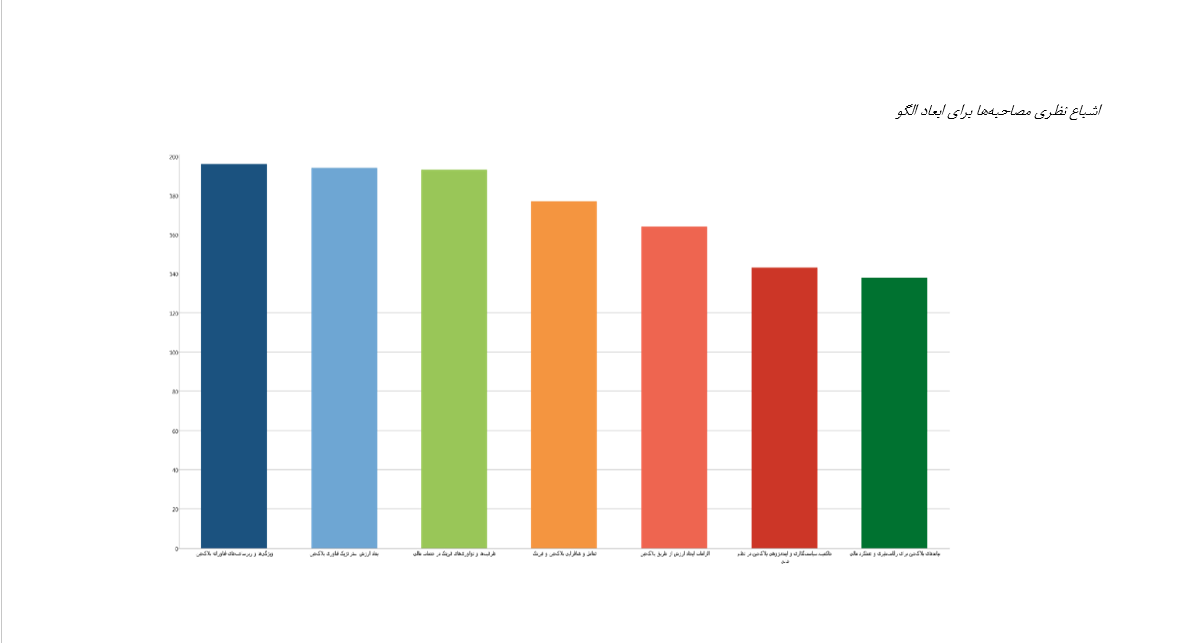
هدف پژوهش حاضر، شناسایی ابعاد و مؤلفهها، ساختاربندی روابط علّی و سلسلهمراتبی، و اعتبارسنجی مدل ارزش استراتژیک فناوری بلاکچین در اکوسیستم فینتک و خدمات مالی بود. این پژوهش با رویکرد آمیخته اکتشافی–تأییدی و در سه مرحله کیفی، ساختاری و کمی انجام شد. در مرحله کیفی، ۲۰ خبره حوزه بلاکچین، فینتک و خدمات مالی با روش نمونهگیری هدفمند و گلولهبرفی انتخاب شدند و مصاحبههای نیمهساختاریافته تا دستیابی به اشباع نظری ادامه یافت. دادهها با روش ششمرحلهای تحلیل مضمون در نرمافزار MAXQDA تحلیل شدند. سپس، برای تعیین روابط، تقدم و تأخر و سطحبندی مضامین فراگیر، از مدلسازی ساختاری تفسیری و تحلیل MICMAC استفاده شد. در مرحله کمی، پرسشنامه محققساخته پس از تأیید روایی صوری، محتوایی، همگرا و واگرا و پایایی، در میان ۳۸۴ نفر از کارکنان کسبوکارهای مالی و بانکی توزیع شد. دادهها با SPSS و مدلسازی معادلات ساختاری مبتنی بر حداقل مربعات جزئی در SmartPLS تحلیل شدند. نتایج مدلسازی ساختاری تفسیری نشان داد الزامات ایجاد ارزش از طریق بلاکچین و مؤلفههای حکمرانی، سیاستگذاری و آیندهپژوهی در پایه مدل و در زمره عوامل دارای قدرت نفوذ بالا قرار دارند. ویژگیها و زیرساختهای فناورانه بلاکچین در سطح بعدی، ظرفیتها و نوآوریهای فینتک و تعامل و همافزایی بلاکچین و فینتک در سطوح میانی، و ابعاد ارزش استراتژیک و پیامدهای رقابتپذیری و عملکرد مالی در سطح نهایی قرار گرفتند. نتایج مدلسازی معادلات ساختاری، معناداری روابط اصلی مدل و قدرت تبیین مناسب سازههای درونزا را تأیید کرد. مقادیر آلفای کرونباخ و پایایی ترکیبی سازهها بیشتر از ۰٫۷ و مقادیر میانگین واریانس استخراجشده بیشتر از ۰٫۵ بود؛ همچنین، معیار فورنل–لارکر روایی واگرای مدل را تأیید کرد. ارزش استراتژیک بلاکچین پیامد مستقیم استقرار فناوری نیست، بلکه از تعامل زیرساختهای فنی، قابلیتهای فینتکی، آمادگی سازمانی و انسانی، تنظیمگری و حکمرانی بینسازمانی شکل میگیرد. بنابراین، تحقق پیامدهای مالی و رقابتی مستلزم رویکردی مرحلهای، اکوسیستمی و هماهنگ است.
دانلودها
مراجع
Adegbite, A. (2024). The role of blockchain technology in enhancing financial inclusion. Iosr Journal of Economics and Finance, 15. https://doi.org/10.9790/5933-1505071928
Agbelade, O. (2023). A comparative analysis of financial technology (fintech) legal framework: Blockchain, mobile payment solutions and data protection as special case study.
Ahmad, Z., Khan, A. A., & Burki, A. K. (2024). Financial sustainability in emerging markets: The role of fintech, risk management, and operational efficiency. Contemporary Journal of Social Science Review, 2(04), 339-353.
Alnsour, I. R. (2022). Impact of fintech over consumer experience and loyalty intentions: An empirical study on Jordanian Islamic banks. Cogent Business & Management, 9(1), 2141098. https://doi.org/10.1080/23311975.2022.2141098
Alt, R., Beck, R., & Smits, M. T. (2018). FinTech and the transformation of the financial industry. Electronic Markets, 28(3). https://doi.org/10.1007/s12525-018-0310-9
Anoop, V. S., & Goldston, J. (2022). Decentralized finance to hybrid finance through blockchain: A case-study of Acala and Current. Journal of Banking and Financial Technology, 6(1), 109-115. https://doi.org/10.1007/s42786-022-00041-0
Arabimoghadam, H., Motameni, A., & Otarkhani, A. (2025). Comprehensive formulation of a framework for fintech dimensions and components. Information Management Sciences and Techniques, 11(2), 71-92.
Boratynska, K. (2019). Impact of digital transformation on value creation in FinTech services: An innovative approach. Journal of Promotion Management, 25(5), 631-639. https://doi.org/10.1080/10496491.2019.1585543
Chang, V., Baudier, P., Zhang, H., Xu, Q., Zhang, J., & Arami, M. (2020). How blockchain can impact financial services: The overview, challenges and recommendations from expert interviewees. Technological Forecasting and Social Change, 158, 120166. https://doi.org/10.1016/j.techfore.2020.120166
Chao, Y., & Goli, A. (2024). Integrating blockchain technology in business models for sustainable innovation. Sustainability, 16(16), 7217. https://doi.org/10.3390/su16167217
Del Sarto, N., Gai, L., & Ielasi, F. (2024). Financial innovation: The impact of blockchain technologies on financial intermediaries. Journal of Financial Management, Markets and Institutions, 12(01), 2350005. https://doi.org/10.1142/S2282717X23500056
Ding, N., Gu, L., & Peng, Y. (2022). Fintech, financial constraints and innovation: Evidence from China. Journal of Corporate Finance, 73, 102194. https://doi.org/10.1016/j.jcorpfin.2022.102194
Dixit, S., & Jangid, J. (2024). Exploring smart contracts and artificial intelligence in FinTech.
Domashenko, S., Hres-Yevreinova, S., Zadoia, Y., Starostenko, D., & Salin, S. (2023). Blockchain and fintech technologies in the digital space of financial and industrial companies. Sustainable Engineering and Innovation, 5(2), 281-302. https://doi.org/10.37868/sei.v5i2.id232
Ediagbonya, V., & Tioluwani, C. (2023). The role of fintech in driving financial inclusion in developing and emerging markets: Issues, challenges and prospects. Technological Sustainability, 2(1), 100-119. https://doi.org/10.1108/TECHS-10-2021-0017
Ehteshami Nejad, A., & Pakzad. (2023). The role of blockchain technologies in creating transparency and security in entrepreneurial financial transactions. Technology in Entrepreneurship and Strategic Management, 2(4).
Faccia, A., Moşteanu, N. R., Cavaliere, L. P. L., & Mataruna-Dos-Santos, L. J. (2020). Electronic money laundering, the dark side of fintech: An overview of the most recent cases. Proceedings of the 2020 12th International Conference on Information Management and Engineering,
Fasnacht, D. (2021). Banking 4.0: Digital ecosystems and super-apps. In Theories of Change: Change Leadership Tools, Models and Applications for Investing in Sustainable Development (pp. 235-256). Springer International Publishing. https://doi.org/10.1007/978-3-030-52275-9_15
Hashemi, M., Safdari Ranjbar, M., & Nourbakhsh, A. (2021). Identifying windows of opportunity for blockchain technology in Iran's banking industry. Science and Technology Policy Letter, 11(2), 35-53.
Hassan, M. K., Rabbani, M. R., Jreisat, A., & Hossain, M. M. (2022). Fintech, pandemic, and the Islamic financial system: Innovative financial services and its shariah compliance. In FinTech in Islamic Financial Institutions: Scope, Challenges, and Implications in Islamic Finance (pp. 243-261). Springer International Publishing. https://doi.org/10.1007/978-3-031-14941-2_12
Hooshyar, R., Rousta, A., & Gholami. (2023). Developing a value-creation model in the insurance industry with a focus on blockchain technology. Innovation Management in Defense Organizations, 6(1), 83-108.
Jalal, A., Al Mubarak, M., & Durani, F. (2023). Financial technology (fintech). In Artificial Intelligence and Transforming Digital Marketing (pp. 525-536). Springer Nature Switzerland. https://doi.org/10.1007/978-3-031-35828-9_45
Jena, R. K. (2022). Examining the factors affecting the adoption of blockchain technology in the banking sector: An extended UTAUT model. International Journal of Financial Studies, 10(4), 90. https://doi.org/10.3390/ijfs10040090
Karimova, I. Y. K. (2025). The role of fintech in driving economic growth: Transforming financial services and enhancing market efficiency. Oriental Renaissance: Innovative, Educational, Natural and Social Sciences, 5(1), 193-200.
Khatwani, R., Mishra, M., Bedarkar, M., Nair, K., & Mistry, J. (2023). Impact of blockchain on financial technology innovation in the banking, financial services and insurance (BFSI) sector. Journal of Statistics Applications and Probability, 12(1), 181-189. https://doi.org/10.18576/jsap/120117
Kiymaz, H., & Valdez, C. H. M. (2024). Blockchain in Fintech: A catalyst for disrupting the financial world. In The Emerald Handbook of Fintech (pp. 251-265). Emerald Publishing Limited. https://doi.org/10.1108/978-1-83753-608-520241032
Kumari, A., & Devi, N. C. (2022). The impact of fintech and blockchain technologies on banking and financial services. Technology Innovation Management Review, 12(1/2). https://doi.org/10.22215/timreview/1481
Mahim, M. M. H., Hong, T. K., Rahman, M., Chan, M. P., Rahman, I., Uddin, S. R., & Haider, S. A. (2025). Blockchain-based business FinTech management using artificial intelligence algorithms and computing technologies.
Manoharan, A. (2022). Blockchain technology: Reinventing trust and security in the digital world.
Mansouri, S., & Dehghani, E. (2021). Developing a model for improving the quality of organizational training based on an interpretive structural modeling approach: A case study of industries in Yazd Province. Educational Planning Studies, 10(19), 106-124.
Mansouri, S., Rezaei, M., & Ramezani, D. (2023). Presenting a model of factors affecting the development of scientific tourism in Iran's higher education system: An interpretive structural study. Management and Educational Perspective, 5(4), 169-192.
Mohamed, H. (2021). Decentralizing finance via cryptocurrencies and tokenization of assets and peer-to-peer platforms. International Journal of Islamic Economics, 3(01), 1-16. https://doi.org/10.32332/ijie.v3i1.3128
Mohammadi, F., Darabi, R., & Badiei, H. (2024). Identifying and presenting a model of factors affecting fintech implementation in the national banking system. Financial Accounting and Auditing Research Journal, 16(61).
Mohsen Kazem, S., Rezazadeh, A., Mohammadzadeh, Y., & Mohseni Zanoozi, S. J. (2026). The effect of fintech on financial inclusion and financial stability in selected developing countries. Financial Research, 28(1), 261-299.
Moslemi, M., Mehrara, M., & Moslemi, A. (2024). The effect of blockchain technology on the quality of the audit process: An empirical study in the banking sector using panel data. Islamic Economics and Banking, 13(49), 439-461.
Ogunrinde, A., De-Pablos-Heredero, C., Montes-Botella, J. L., & Fernández-Sanz, L. (2025). The impact of blockchain technology and dynamic capabilities on banks' performance. Big Data and Cognitive Computing, 9(6), 144. https://doi.org/10.3390/bdcc9060144
Politou, E., Casino, F., Alepis, E., & Patsakis, C. (2019). Blockchain mutability: Challenges and proposed solutions. Ieee Transactions on Emerging Topics in Computing, 9(4), 1972-1986. https://doi.org/10.1109/TETC.2019.2949510
Pourrabbi, M. V., Salehi, M., Dalwai, T., & Moradi, M. (2025). Evaluating blockchain's impact on financial reporting: Opportunities and threats in fintech's input, processing, and output phases. Journal of Accounting & Organizational Change. https://doi.org/10.1108/JAOC-09-2024-0316
Rahman, M. H., Yeoh, W., & Pal, S. (2026). Towards a unified blockchain business value framework: A systematic literature review. Enterprise Information Systems, 2644596. https://doi.org/10.1080/17517575.2026.2644596
Rjoub, H., Adebayo, T. S., & Kirikkaleli, D. (2023). Blockchain technology-based FinTech banking sector involvement using adaptive neuro-fuzzy-based K-nearest neighbors algorithm. Financial Innovation, 9(1), 65. https://doi.org/10.1186/s40854-023-00469-3
Sadeghi, A., Irajpour, A., & Ehtesham Rathi, R. (2023). A strategic value-creation model of blockchain technology in financial and banking domains. Monetary-Banking Research Journal(58).
Sadeghi, A., Irajpour, A., & Ehtesham Rathi, R. (2024). Presenting a fintech-based blockchain technology value model in financial and banking businesses. Program and Development Research, 5(1), 183-223.
Senarathna, J. I. (2025). The role of cryptography in blockchain: Ensuring immutability, transparency and security.
Sharma, P., Moparthi, N. R., Namasudra, S., Shanmuganathan, V., & Hsu, C. H. (2022). Blockchain-based IoT architecture to secure healthcare system using identity-based encryption. Expert Systems, 39(10), e12915. https://doi.org/10.1111/exsy.12915
Siahaan, P. Y., & Ng, J. (2024). Analysis of blockchain technology implementation in improving transparency and trust in Indonesia's financial sector. Jurnal Sistem Informasi dan Ilmu Komputer, 2(4). https://doi.org/10.59581/jusiik-widyakarya.v2i4.4158
Tan, T. M., & Saraniemi, S. (2023). Trust in blockchain-enabled exchanges: Future directions in blockchain marketing. Journal of the Academy of Marketing Science, 51(4), 914-939. https://doi.org/10.1007/s11747-022-00889-0
Tayyar, S., & Nazari, E. (2018). Applied potentials of blockchain in the insurance industry: Opportunities and challenges. 25th National Conference on Insurance and Development, Tehran, Iran.
Tseng, C. T., & Shang, S. S. (2021). Exploring the sustainability of the intermediary role in blockchain. Sustainability, 13(4), 1936. https://doi.org/10.3390/su13041936
Upadhyay, N. (2024). Business models for the blockchain: An empirical analysis. Digital Business, 4(2), 100082. https://doi.org/10.1016/j.digbus.2024.100082
Yadav, A. S., Singh, N., & Kushwaha, D. S. (2023). Evolution of blockchain and consensus mechanisms and its real-world applications. Multimedia Tools and Applications, 82(22), 34363-34408. https://doi.org/10.1007/s11042-023-14624-6
Yuthas, K., Sarason, Y., & Aziz, A. (2021). Strategic value creation through enterprise blockchain. The Journal of the British Blockchain Association. https://doi.org/10.31585/jbba-4-1-(7)2021
Zarei, A., Modarresi, M., & Ebrahimi, M. (2024). Factors affecting the use of blockchain technology in electronic banking service management: A case study of Bank Mellat. Industrial Technology Development Quarterly, 22(57), 35-50.

دانلود
چاپ شده
ارسال
بازنگری
پذیرش
شماره
نوع مقاله
مجوز
حق نشر 2025 Hamid Roshan (Author); Baitullah Akbari Moghadam; Akbar AlemTabriz (Author)

این پروژه تحت مجوز بین المللی Creative Commons Attribution-NonCommercial 4.0 می باشد.