Identifying the Factors Affecting the Success of University-Based Entrepreneurial Ecosystems in Iran Using the Fuzzy Delphi Approach
DOI:
https://doi.org/10.61838/kman.jtesm.489Keywords:
University-based entrepreneurship ecosystem, Fuzzy Delphi, Key success factors, entrepreneurship educationAbstract
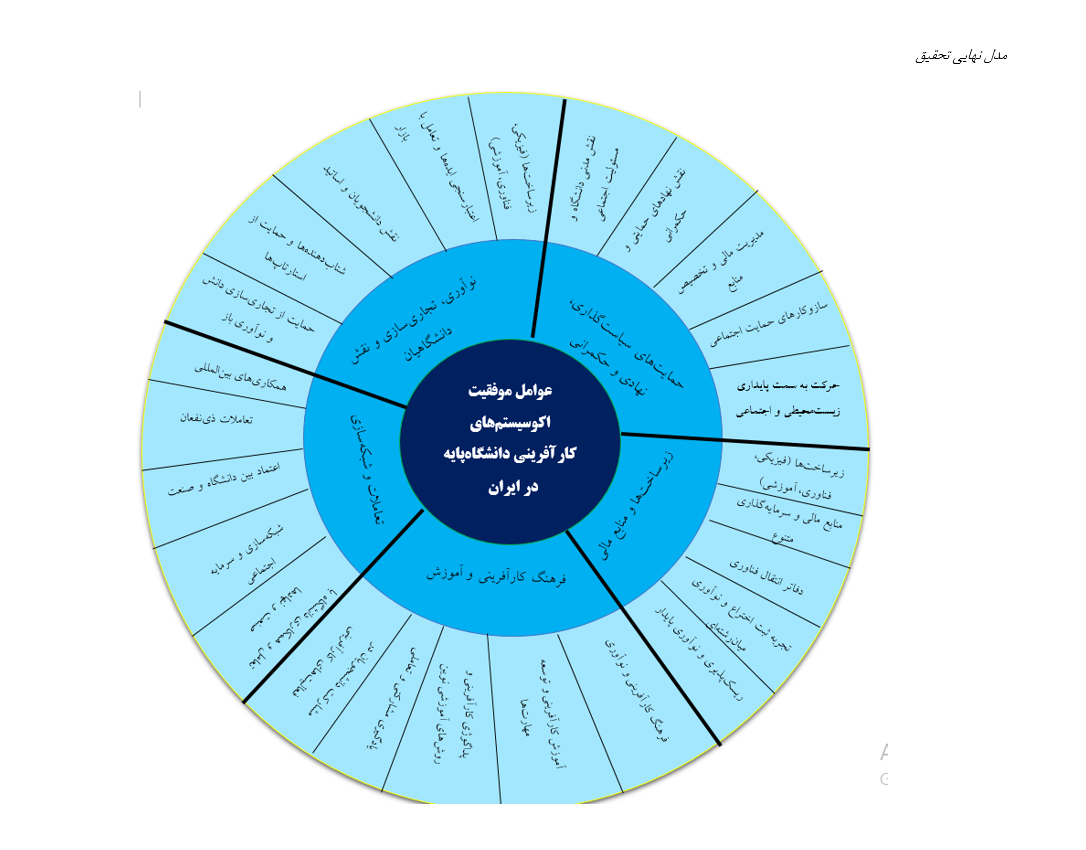
This study aimed to identify, validate, and prioritize the factors affecting the success of university-based entrepreneurial ecosystems in Iran, with particular emphasis on the University of Tehran and Sharif University of Technology. This applied study employed an analytical-survey design based on the fuzzy Delphi method. Following a systematic review of the theoretical and empirical literature, 25 indicators of successful university-based entrepreneurial ecosystems were extracted and classified into five dimensions: institutional policymaking and support, infrastructure and financial resources, entrepreneurial culture and education, interactions and networking, and innovation and commercialization. The expert population comprised specialists in university entrepreneurship, of whom 10 university professors and researchers, managers of innovation and incubation centers, startup founders, and executive experts were selected through purposive sampling. Data were collected through a fuzzy Delphi questionnaire administered in two rounds. Expert judgments expressed through linguistic variables were converted into triangular fuzzy numbers. Fuzzy means were subsequently calculated, and the indicators were defuzzified to obtain crisp values. The questionnaire’s content validity was confirmed by specialists, while an inconsistency ratio of 0.039 demonstrated adequate reliability. Data analysis was conducted using Microsoft Excel. In both Delphi rounds, the defuzzified value of each of the 25 indicators exceeded the acceptance threshold of 3; consequently, all indicators were retained as key success factors. The difference between the defuzzified values obtained in the first and second rounds did not exceed 0.20 for any indicator, demonstrating expert consensus and justifying termination of the Delphi process after the second round. The highest-priority factors were entrepreneurship pedagogy and innovative teaching methods, with a crisp value of 4.40; entrepreneurship education and skills development, with a value of 4.18; technology transfer offices, with a value of 4.12; and trust between universities and industry, with a value of 4.12. The success of university-based entrepreneurial ecosystems in Iran depends more strongly on educational, human, and institutional capacities than on the expansion of physical infrastructure alone. Accordingly, university policies should prioritize redesigning entrepreneurship curricula, adopting interactive entrepreneurial pedagogies, strengthening the authority and capabilities of technology transfer offices, and establishing transparent and sustainable mechanisms for building trust between universities and industry.
Downloads
Downloads
Publication Timeline
- Submitted
- Revised
- Accepted
Issue
Section
License
Copyright (c) 2025 Kamyar Khoshnoudzadeh (Author); Mahdi Mohammadi; Sina Tarighi (Author)

This work is licensed under a Creative Commons Attribution-NonCommercial 4.0 International License.