نقش هوش مصنوعی در خرید هیجانی با نقش میانجیگری برندسازی در بستر شبکههای اجتماعی عمومی
کلمات کلیدی:
هوش مصنوعی, رفتار مصرفکننده, خرید هیجانی, برندسازی, شبکههای اجتماعیچکیده
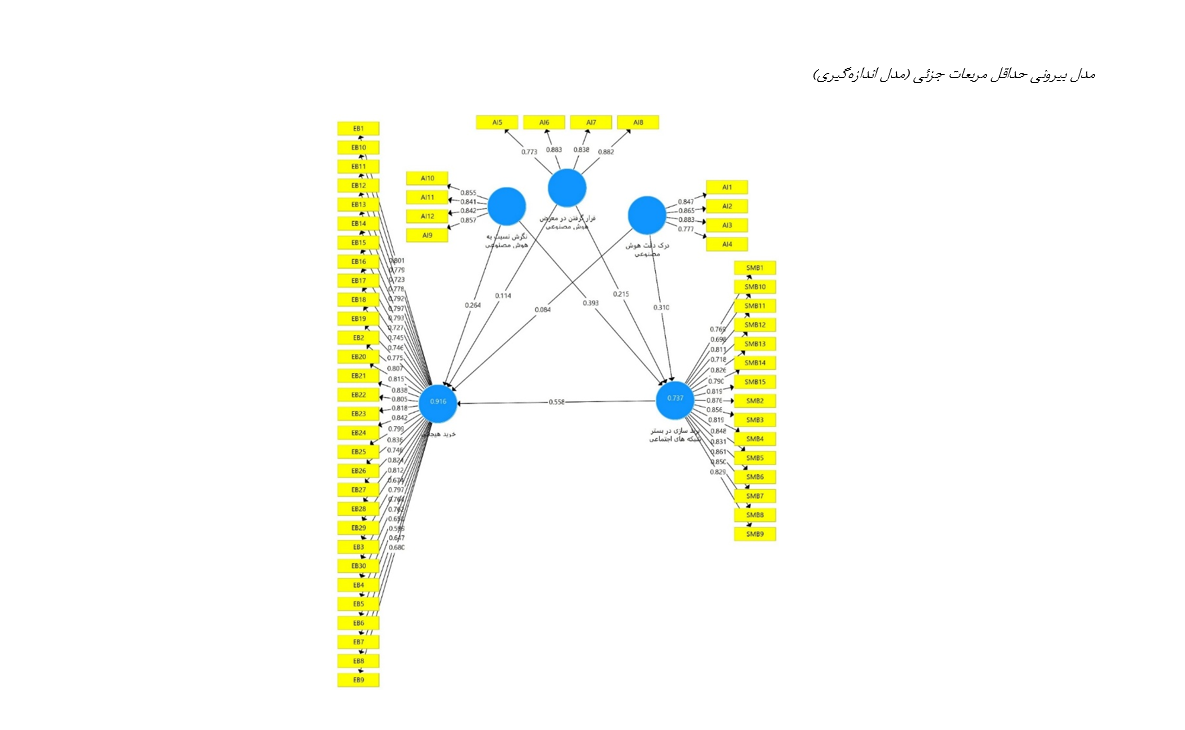
هدف این پژوهش بررسی تأثیر هوش مصنوعی بر خرید هیجانی مشتریان با توجه به نقش میانجیگری برندسازی در بستر شبکههای اجتماعی عمومی بود. این پژوهش از نظر هدف کاربردی و از لحاظ روش، توصیفی-همبستگی و پیمایشی بود. جامعه آماری شامل مشتریان وبسایت دیجیکالا بود که از میان آنان 384 نفر با استفاده از فرمول کوکران و روش نمونهگیری تصادفی طبقهای انتخاب شدند. دادهها از طریق پرسشنامه هوش مصنوعی شامل سه مؤلفه قرار گرفتن در معرض هوش مصنوعی، نگرش نسبت به هوش مصنوعی و درک دقت هوش مصنوعی، پرسشنامه خرید هیجانی و پرسشنامه برندسازی در شبکههای اجتماعی گردآوری شد. برای آزمون فرضیهها از مدلسازی معادلات ساختاری با رویکرد حداقل مربعات جزئی و نرمافزار SmartPLS استفاده شد. نتایج نشان داد قرار گرفتن در معرض هوش مصنوعی بر خرید هیجانی تأثیر مثبت و معناداری دارد (β=0.114، t=3.357، p=0.001). همچنین نگرش نسبت به هوش مصنوعی (β=0.264، t=6.016، p<0.001)، درک دقت هوش مصنوعی (β=0.084، t=2.648، p=0.008) و برندسازی در شبکههای اجتماعی عمومی (β=0.558، t=16.973، p<0.001) تأثیر مثبت و معناداری بر خرید هیجانی داشتند. نتایج آزمون سوبل نیز نشان داد برندسازی در شبکههای اجتماعی عمومی نقش میانجی جزئی و معناداری در روابط میان متغیرهای هوش مصنوعی و خرید هیجانی ایفا میکند؛ بهطوری که مقادیر VAF بین 0.453 تا 0.673 قرار داشت. یافتههای پژوهش نشان داد هوش مصنوعی از طریق شخصیسازی تعاملات، افزایش اعتماد و بهبود تجربه مشتری میتواند خرید هیجانی را تقویت کند. همچنین برندسازی در شبکههای اجتماعی عمومی این تأثیر را تشدید کرده و به عنوان یک سازوکار میانجی مهم عمل میکند. بنابراین، استفاده همزمان از فناوریهای هوش مصنوعی و راهبردهای مؤثر برندسازی در شبکههای اجتماعی میتواند به افزایش تعامل عاطفی مشتریان، تقویت تجربه خرید و ارتقای عملکرد بازاریابی کسبوکارهای آنلاین منجر شود.
دانلودها
مراجع
Alizadeh, H., Nazarpour Kashani, H., Jalali Filshour, M., & Pourjabbari Khameneh, A. H. (2023). Evaluating the Prediction of Consumer Behavior Based on Artificial Intelligence-Based Marketing. National Conference on Management and Humanities Research in Iran,
Alsheibani, S., Cheung, Y., Messom, C., & Alhosni, M. (2020). Winning AI Strategy: Six-Steps to Create Value from Artificial Intelligence. Americas Conference on Information Systems, Online.
Azad, N., Soleimani, M. H., & Sedighi, S. (2022). The Effect of Trust and Perceived Value on Customer Intention as Well as Customer Reasons and Experience in Artificial Intelligence. National Conference on Management, Psychology and Behavioral Sciences,
Boozary, P. (2024). The Impact of Marketing Automation on Consumer Buying Behavior in the Digital Space via Artificial Intelligence. Power System Technology, 48(1), 1008-1021.
Buettner, R. (2020). The Impact of Trust in Consumer Protection on Internet Shopping Behavior: An Empirical Study Using a Large Official Dataset from the European Union. 2020 IEEE Sixth International Conference on Big Data Computing Service and Applications (Big Data Service),
Duan, F. L. (2023). Artificial Intelligence. In When AIAA Meets IEEE: Intelligent Aero-Engine and Electric Aircraft (pp. 23-45). Springer Nature Singapore.
Fahim, E., Poursalimi, M., Hosseinzadeh, A., & Ghasemi Namaghi, M. (2020). Designing a Social Branding Model in the Banking Industry on Social Networks. Brand Management, 7(23), 12-38.
Guerra-Tamez, C. R., Kraul Flores, K., Serna-Mendiburu, G. M., Chavelas Robles, D., & Ibarra Cortés, J. (2024). Decoding Gen Z: AI's Influence on Brand Trust and Purchasing Behavior. Frontiers in Artificial Intelligence, 7, 1323512.
Haleem, A., Javaid, M., Qadri, M. A., Singh, R. P., & Suman, R. (2022). Artificial Intelligence (AI) Applications for Marketing: A Literature-Based Study. International Journal of Intelligent Networks, 3, 119-132.
Khan, S. I. (2022). Impact of Artificial Intelligence on Consumer Buying Behaviors: Study about the Online Retail Purchase. International journal of health sciences(II), 8121-8129.
Mantello, P., Ho, M. T., Nguyen, M. H., & Vuong, Q. H. (2023). Bosses without a Heart: Socio-Demographic and Cross-Cultural Determinants of Attitude toward Emotional AI in the Workplace. Ai & Society, 38, 97-119. https://doi.org/10.1007/s00146-021-01290-1
McLean, G., Osei-Frimpong, K., & Barhorst, J. (2021). Alexa, Do Voice Assistants Influence Consumer Brand Engagement? Examining the Role of AI Powered Voice Assistants in Influencing Consumer Brand Engagement. Journal of Business Research, 124, 312-328. https://doi.org/10.1016/j.jbusres.2020.11.045
Meyer-Waarden, L., & Cloarec, J. (2021). Baby, You Can Drive My Car: Psychological Antecedents That Drive Consumers' Adoption of AI-Powered Autonomous Vehicles. Technovation, 109, 102348. https://doi.org/10.1016/j.technovation.2021.102348
Mikalef, P., & Gupta, M. (2021). Artificial Intelligence Capability: Conceptualization, Measurement Calibration, and Empirical Study on Its Impact on Organizational Creativity and Firm Performance. Information & Management. https://doi.org/10.1016/j.im.2021.103434
Mousavi, S. M. H., Hamdi, K., & Vazifehdoost, H. (2020). Presenting a Model for Measuring the Effects of Social Media and Emotional Intelligence on Consumer Purchase Decision-Making Behavior. Journal of Mashhad University of Medical Sciences, 63(6), 3095-3112.
Sajan, A., & Giri, P. (2025). Understanding artificial intelligence and its major role in branding Strategic Brand Management in the Age of AI and Disruption. IGI Global Scientific Publishing. https://doi.org/10.4018/979-8-3693-9461-8.ch006
Sakib, S. N. (2023). Artificial Intelligence Model for Analyzing the Buying Patterns of Customers. In Handbook of Research on AI and Machine Learning Applications in Customer Support and Analytics (pp. 37-55). IGI Global.
Shirmohammadi, Y., & Bostanmanesh Fard, A. (2022). Designing a Customer Purchase Model from Smart Stores during the Coronavirus Period with Emphasis on Artificial Intelligence. Smart Business Management Studies, 10(40), 233-263.
Shutaleva, A., Novgorodtseva, A. N., & Ryapalova, O. S. (2022). Self-Presentation in Instagram: Promotion of a Personal Brand in Social Networks.
Sicari, S., Rizzardi, A., & Porisini, A. C. (2020). 5G in the Internet of Things Era: An Overview on Security and Privacy. Computer Networks, 179, 107345. https://doi.org/10.1016/j.comnet.2020.107345
Talha, M. (2025). Optimizing Digital Marketing Campaigns Using Artificial Intelligence (AI) and Social Media Analytics: A Comparative Study of Machine Learning Algorithms. International Journal of Scientific Research in Engineering and Management, 9(3), 1-9. https://doi.org/10.55041/ijsrem42691
Teng, H. Y., Li, M. W., & Chen, C. Y. (2025). Does Smart Technology, Artificial Intelligence, Robotics, and Algorithm (STARA) Awareness Have a Double-Edged-Sword Influence on Proactive Customer Service Performance? Effects of Work Engagement and Employee Resilience. Journal of Hospitality Marketing & Management, 1-24. https://doi.org/10.1080/19368623.2025.2449853
Verma, R., Sonker, V., Singh, R. K., & Sharma, R. (2024). An Appraisal on Impact of Artificial Intelligence Driven Algorithms (Auto-Suggestions) in Determining Consumer's Buying Behavior across E-Commerce Platforms. Academy of Marketing Studies Journal, 28(1).
Wamba-Taguimdje, S. L., Wamba, S. F., Kamdjoug, J. R. K., & Wanko, C. E. T. (2020). Influence of Artificial Intelligence (AI) on Firm Performance: The Business Value of AI-Based Transformation Projects. Business Process Management Journal, 26(7), 1893-1924. https://doi.org/10.1108/BPMJ-10-2019-0411
Xu, Q. (2025). Artificial Intelligence Enabling Marketing in Africa: A Study of Precision Marketing Strategies and Economic Impact in Low-Income Markets. Highlights in Business Economics and Management, 56, 72-77. https://doi.org/10.54097/xephsz35

دانلود
چاپ شده
ارسال
بازنگری
پذیرش
شماره
نوع مقاله
مجوز
حق نشر 2025 Leila Daneshvar; Amir Houshang Tajfar (Author)

این پروژه تحت مجوز بین المللی Creative Commons Attribution-NonCommercial 4.0 می باشد.