Identifying Effective Drivers in Green Marketing Based on Indigenous Values in Ecotourism Development with a Futures Research Approach (Case Study: New Public Sports Games in Tabriz)
DOI:
https://doi.org/10.61838/kman.jtesm.459Keywords:
Futures Studies, Green Marketing, Indigenous Values, Ecotourism, Tabriz, Mass Sports GamesAbstract
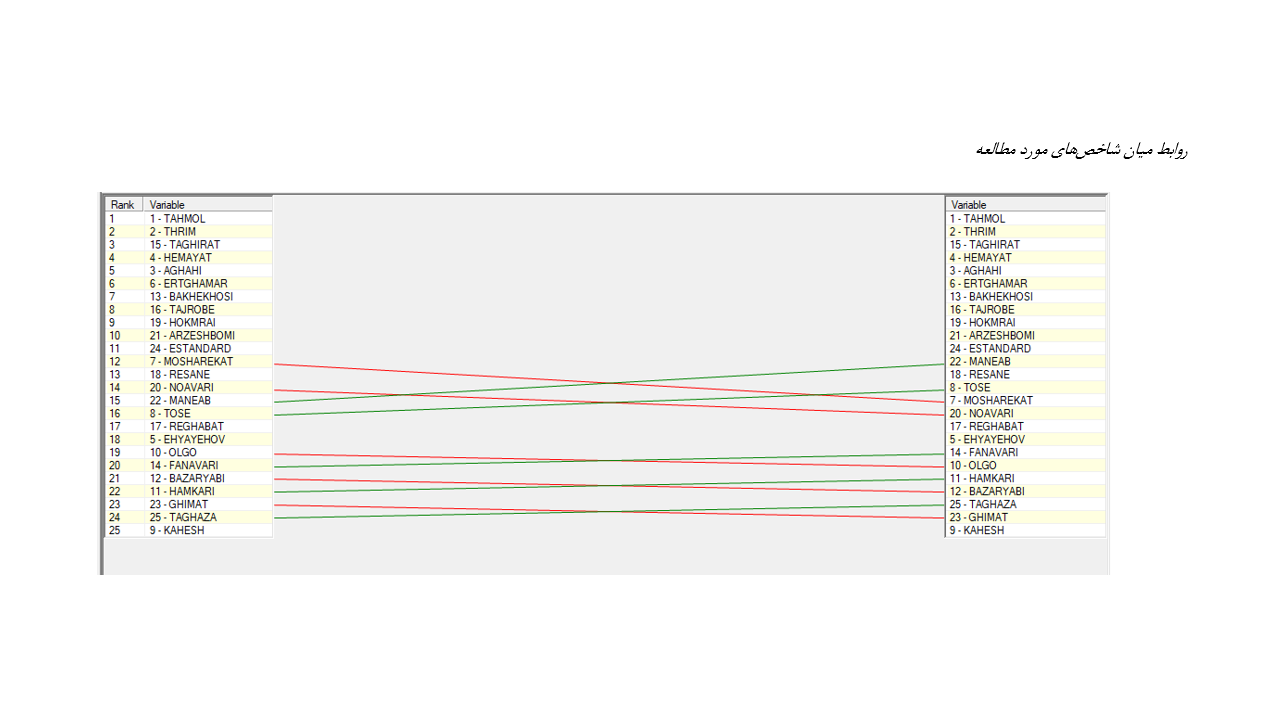
This study aimed to develop a futures-oriented model of green marketing based on indigenous values for ecotourism development in Tabriz and to identify the key drivers shaping its future through the integration of new public sports games. This qualitative futures research employed a combination of Grounded Theory, MICMAC cross-impact analysis, and binary morphological analysis. Key indicators influencing indigenous value-based green marketing in ecotourism development were first extracted through a systematic review of the literature. Subsequently, the influence and dependence of variables were assessed using a cross-impact matrix to identify critical drivers. Based on four major drivers—climate change, sanctions and currency fluctuations, government support, and ecological carrying capacity—future spaces were constructed and compatible scenarios for the 2035 horizon were developed. Inferential findings indicated that the system exhibits a relatively stable structure, with climate change, sanctions and currency fluctuations, government support, and ecological carrying capacity emerging as the most influential drivers. Morphological analysis generated 16 possible future spaces and resulted in four compatible scenarios: Resilient Green Tabriz, Reviving Tabriz, Sustainable Local Tabriz, and Climate Winter Tabriz. The results demonstrated that indigenous values, including respect for nature and traditional hospitality, constitute a strong source of competitive differentiation in green marketing. Furthermore, new public sports games function as a core ecotourism product in favorable scenarios, fostering sustainable development, community engagement, and tourist attraction, whereas their role becomes highly restricted or discontinued under pessimistic future conditions. The future of ecotourism in Tabriz is strongly shaped by the interaction of climatic, economic, institutional, and environmental factors. Indigenous value-based green marketing can serve as an effective strategy for enhancing ecotourism resilience, strengthening destination competitiveness, and addressing future challenges. Institutional support, ecological capacity management, and environmentally responsible public sports activities are essential for achieving desirable future scenarios.
Downloads
References
Asadpourian, Z., Rahman, M., & Gholamrezaei, S. (2019). Identifying Criteria and Measuring the Level of Sustainable Ecotourism Development among Tourism Hubs of Lorestan Province. Iranian Journal of Agricultural Economics and Development Research, 50(3), 483-499.
Baca, N., & Reshidi, N. (2025). Green Branding and Consumer Behavior: Unveiling the Impact of Environmental Marketing Strategies on Purchase Decisions. Business Strategy and the Environment, 34(3), 3701-3713. https://doi.org/10.1002/bse.4172
Chang, W., Li, H., Khamarudin, M., & Ali Khan, W. (2025). Influencing Eco-Conscious Travelers: The Role of Green Marketing in Promoting Sustainable Destinations. Acta Psychologica, 260, 105506. https://doi.org/10.1016/j.actpsy.2025.105506
Fakhari, S. (2025). Investigating Local Community Awareness toward Supporting Ecotourism Development: The Case of Damavand City. Applied Research in Geographical Sciences, 25(79), 198-221.
Ghaderi, A., & Mohajer, A. (2025). Investigating the Components of Low-Carbon Urban Tourism: A Meta-Synthesis Approach. Urban Studies Quarterly, 14(56), 87-108.
Ghasemi, J., Gholami, H., Afzali Gorouh, A., & Alambeigi, A. (2022). Analysis of the Effects of Ecotourism on Empowering Local Communities: A Case Study of Savadkuh County. Sustainable Environmental Education, 11(2), 87-106.
Habibi Rad, A., Valipour, F., & Safari, S. (2022). Developing an Innovation Model in Tourism as an International Industry. Tourism and Development, 11(3), 262-274.
Hadifar, S., Amanollahi, J., Emamgholi, L., & Zamani, N. (2026). Investigating the Threats of Sustainable Ecotourism by Integrating the Norms with GIS and Remotely Sensed Data. Journal for Nature Conservation, 90, 127198. https://doi.org/10.1016/j.jnc.2025.127198
Han, J., Zhang, Y., Xiao, H., & Zhao, Z. (2026). Green Marketing or Demarketing? Temporal Perspectives on Tourists' Pro-Environmental Behavior. Journal of Hospitality and Tourism Management, 66, 101422. https://doi.org/10.1016/j.jhtm.2026.101422
Hashemian, S., & Babaei Hemmati, R. (2024). The Impact of Ecotourism on Sustainable Urban Tourism Development: A Case Study of Qazvin City. First International Conference on the Tourism Industry,
Huang, H., Yu, J., Jiang, D., & Wang, T. (2026). Virtual Influencers as Endorsers in Hospitality Green Marketing. International Journal of Hospitality Management, 133, 104455. https://doi.org/10.1016/j.ijhm.2025.104455
Kadkhodaei, M. (2019). Ranking Methods of Education and Awareness-Raising for Tourists in Ecotourism. National Conference on Ecotourism, Culture, and Tourism Development,
Kolcha, T., Biazen, M., & Girma, Z. (2025). Site Suitability Evaluation for Ecotourism Using Geographic Information System (GIS) and Analytical Hierarchy Process (AHP) in Aroresa and Chire Districts, Southern Ethiopia. International Journal of Geoheritage and Parks, 13(4), 601-615. https://doi.org/10.1016/j.ijgeop.2025.12.001
Luong, T. (2023). Eco-Destination Image, Environment Beliefs, Ecotourism Attitudes, and Ecotourism Intention: The Moderating Role of Biospheric Values. Journal of Hospitality and Tourism Management, 57, 315-326. https://doi.org/10.1016/j.jhtm.2023.11.002
Maddahi, A., & Seyedinasab, A. (2022). Ecotourism and Empowerment of Local Communities. National Conference on Ecotourism, Geotourism, and Natural Heritage Conservation,
Mousavi, H., Kiani Salmi, S., & Setayesh, F. (2021). Estimating Carrying Capacity and Evaluating Ecological Potential to Identify Land Zones Suitable for Tourism: A Case Study of the Potash Khur and Biabanak Tourism Complex Area. Geographical Studies of Arid Regions, 12(45).
Najjarzadeh, M., Zaghibi Ghannad, A., & Alikhani, M. (2022). Identifying and Ranking the Capabilities of Social Media in Ecotourism Development. National Conference on Ecotourism, Geotourism, and Natural Heritage Conservation,
Nguyen, N. (2026). Green Marketing. In International Encyclopedia of Business Management (Vol. 3, pp. 40-44). https://doi.org/10.1016/B978-0-443-13701-3.00425-4
Rahimian, M., Molavi, H., & Ahmmadi Chegheni, M. (2025). Predicting Responsible Environmental Behavior in Ecotourism: An Enhanced Model for Environmental Policy Development and Sustainable Management. Sustainable Futures, 10, 101268. https://doi.org/10.1016/j.sftr.2025.101268
Rehman, A., Raheel Manzoor, S., Ullah, A., Han, H., Ariza-Montes, A., & Gil-Marín, M. (2025). Eco-Driven Choices: Green Marketing Orientation Intervention toward Green Purchase Intention in the Home Appliances Industry. Acta Psychologica, 258, 105125. https://doi.org/10.1016/j.actpsy.2025.105125
Saavedra, S. (2025). Economic Development and Environmental Conservation: Evidence from Ecotourism. Economic Development and Cultural Change, 73(3), 1297-1324. https://doi.org/10.1086/730828
Sajasi Qeidari, H., Javaherzadeh, F., & Yousefian, B. (2019). Analysis of the Impact of Economic Sanctions on Tourism Growth: A Case Study of Mashhad City. National Conference on Ecotourism, Culture, and Tourism Development,
Sanoukesh Nada, T., & Asghari Azhiri, B. (2019). Designing an Electronic Marketing Model for Ecotourism Development. 5(10), 79-84.
Shadman Lahiji, F., & Jafari Golvik, M. (2020). Ecotourism as a Mechanism for Achieving a Green Economy in Iran. Environmental Research and Technology.
Sharifi Qazvini, M., Salehpour, M., & Hamzehei, A. (2025). Green Technology: The Role of Technological Innovations in Reducing the Carbon Footprint. Second International Conference on Psychology, Social Sciences, Educational Sciences, and Philosophy,
Sharma, R., & Pradhan, V. (2025). Assessing Community Values of Civil Society Organizations-Led Coastal Ecotourism Conservation Projects in the Climate Change Context. Evaluation and Program Planning, 112, 102624. https://doi.org/10.1016/j.evalprogplan.2025.102624
Shen, W., Chen, Y., Rong, P., Cao, W., Yu, R., Wang, P., & Cheng, J. (2025). Ecotourism Suitability at County Scale in China: Spatial Pattern, Obstacle Factors, and Driving Factors. Ecological Indicators, 178, 113911. https://doi.org/10.1016/j.ecolind.2025.113911
Shi, H., & Chen, W. (2024). Environmental Values, Face, and Ecotourism Intention in China: The Mediating Role of Ecotourism Attitude and the Moderating Role of Emotional Intelligence. Journal of Hospitality and Tourism Management, 61, 101-114. https://doi.org/10.1016/j.jhtm.2024.09.008
Sidqi, M., Bengen, D. G., Priyanta, M., Anggraini, E., & Sadiyah, L. (2026). Sustainable Management of Marine Ecotourism in the Gili Matra Marine Conservation Area: An Economic Valuation and Stakeholder-Based Approach. Regional Studies in Marine Science, 95, 104804. https://doi.org/10.1016/j.rsma.2026.104804
Tavousi, M., & Ghiyasabadi, M. (2024). Title Not Provided in Source Reference. Scientific-Research Quarterly Journal of Tourism and Development, 14(1), 145-163.
Thompson, B. (2022). Ecotourism Anywhere? The Lure of Ecotourism and the Need to Scrutinize the Potential Competitiveness of Ecotourism Developments. Tourism Management, 92, 104568. https://doi.org/10.1016/j.tourman.2022.104568
Tong, Y., & Pang, L. (2024). Can Ecotourism Development Promote Residents' Environmental Concern? A Quasi-Natural Experiment from China. Current Issues in Tourism, 27, 864-872. https://doi.org/10.1080/13683500.2023.2271632
Zada, M., Khan, S., Zada, S., Dhar, D., & Marcao, R. (2025). Harnessing Social Media and NGO Collaboration for Advancing Sustainable Ecotourism Policy: A Pathway to Sustainable Tourism Development. Sustainable Development. https://doi.org/10.1002/sd.3373
Zeng, Y., Zhong, L., & Li, Y. (2026). Identifying Key Areas of Managing Landscape Use Conflicts among Ecotourism Stakeholders in National Parks. Landscape and Urban Planning, 265, 105515. https://doi.org/10.1016/j.landurbplan.2025.105515
Zhai, Y., Deng, H., Xu, S., Huang, G., & Cheng, T. (2026). Carbon Emissions Hedging and Green Marketing. European Journal of Operational Research, 328(3), 797-814. https://doi.org/10.1016/j.ejor.2025.07.029
Zhou, C., & Jiang, B. (2025). How Do Consumers React to AI-Generated Green Marketing Content? A Hybrid Analysis Using PLS-SEM and Text Mining. Journal of Retailing and Consumer Services, 87, 104431. https://doi.org/10.1016/j.jretconser.2025.104431
Ziae, M., Ghaderi, A., & Sasan, A. (2018). Determining Carrying Capacity and Ecological Footprint in Nature-Based Tourism Destinations: A Case Study of Zarivar Lake. Geography and Urban-Regional Planning, 7(25), 39-56.
Downloads
Publication Timeline
- Submitted
- Revised
- Accepted
Issue
Section
License
Copyright (c) 2025 Bahman Valinejad (Author); Seyed Yousef Hajiasghari; Roya Mahmoudi, Mitra Choopanimoghaddam, Vahid Alizadeh Ara, Maryam Mirzaei (Author)

This work is licensed under a Creative Commons Attribution-NonCommercial 4.0 International License.