Analyzing the Drivers of Digital Entrepreneurship Development in the Social Security Organization: A Future-Oriented and Transformative Approach
Keywords:
Development Drivers, Digital Entrepreneurship, Digital Social Justice, Digital Transformation, Social Security OrganizationAbstract
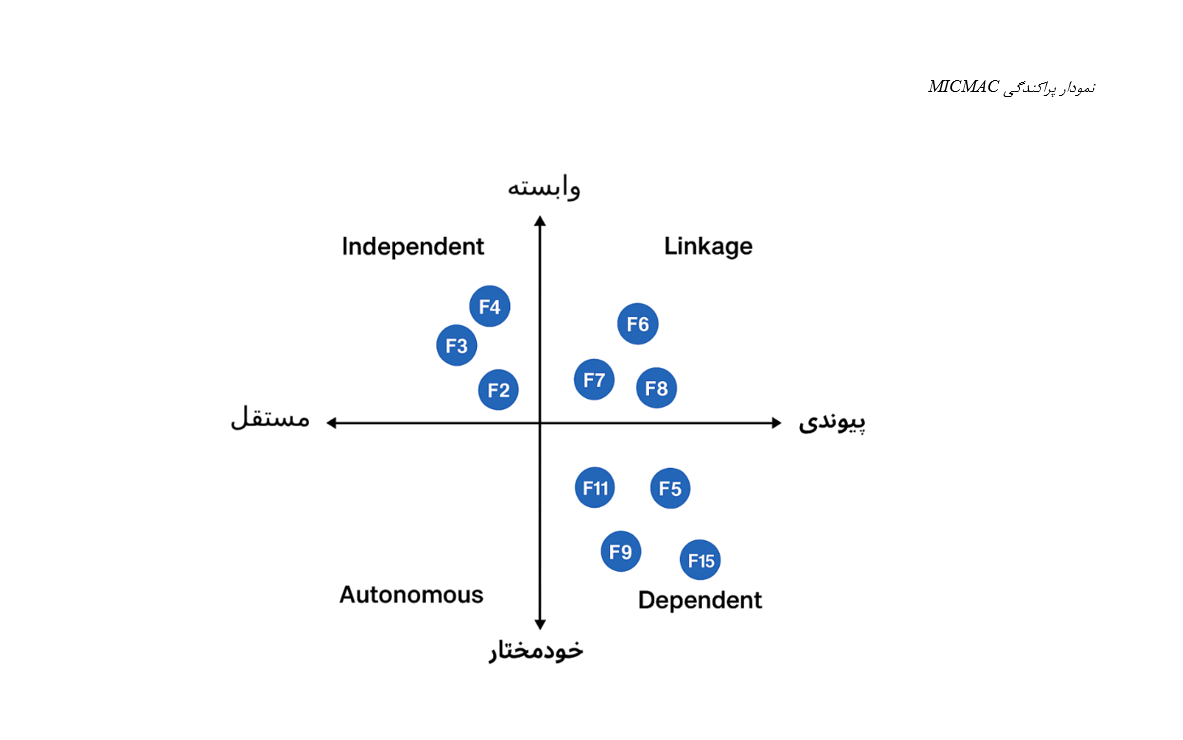
This study aimed to identify and analyze the key drivers of digital entrepreneurship development in the Social Security Organization and to explain their role in shaping the future of digital transformation, organizational innovation, and public value creation. This applied qualitative study involved 30 experts in entrepreneurship, management, information technology, and social security selected through purposive and snowball sampling. Data were collected through semi-structured interviews and analyzed using thematic analysis, Interpretive Structural Modeling (ISM), and MICMAC analysis. Credibility and trustworthiness were enhanced through expert review, member checking, and intercoder agreement procedures. The findings revealed five overarching themes: digital human capital empowerment, technological infrastructure development, smart governance and policymaking, innovation in insurance services, and digital social justice. Digital leadership, employees’ digital competencies, artificial intelligence and data analytics, innovative organizational culture, and changing stakeholder expectations emerged as the most influential transformative drivers. ISM results indicated a four-level hierarchical structure in which individual and human-capital factors constituted the foundational layer, while social and welfare outcomes represented the final level. MICMAC analysis further demonstrated that digital human capital, information technology infrastructure, and cybersecurity possessed the highest driving power in the system. The results indicate that digital entrepreneurship should be viewed not merely as a technological tool but as a strategic mechanism for enhancing service quality, organizational agility, innovation capacity, public value creation, and social justice. Strengthening digital human capital, expanding technological infrastructure, and fostering innovative leadership can significantly accelerate sustainable digital transformation within the Social Security Organization and other public service institutions.
Downloads
References
Al-Khlaileh, M., Kovács, E., & Kovácsné, N. (2023). Determinants of Digital Entrepreneurship Intentions among Business Students in Jordan. Journal of Entrepreneurship Education, 26(3), 45-60.
Baranauskas, G., & Raišienė, A. G. (2022). Transition to Digital Entrepreneurship with a Quest for Sustainability: Development of a New Conceptual Framework. Sustainability, 14(3), 1104. https://doi.org/10.3390/su14031104
Basly, S., & Hammouda, A. (2020). Family Businesses and Digital Entrepreneurship Adoption: A Conceptual Model. Journal of Entrepreneurship and Innovation in Emerging Economies, 6(1), 9-25. https://doi.org/10.1177/2393957520904537
Canestrino, R., Magliocca, P., Ćwiklicki, M., & Pawełek, B. (2024). Digital Transformation for a Better Society: The Role of Digital Entrepreneurship. Sustainability, 16(5), 2190. https://doi.org/10.3390/su16052190
Dehghani-Soltani, M., Ghanbari, A., & Razavi, H. (2024). Digital Economy and Entrepreneurship in Iran: Opportunities and Challenges. Modern Economics Review, 9(2), 112-135.
Elia, G., Margherita, A., & Passiante, G. (2020). Digital Entrepreneurship Ecosystem: How Digital Technologies and Collective Intelligence Are Reshaping the Entrepreneurial Process. Technological Forecasting and Social Change, 150, 119791. https://doi.org/10.1016/j.techfore.2019.119791
Fard, S., Mohammadi, A., & Niksirat, J. (2020). Digital Entrepreneurship Development in Iran: A Three-Dimensional Conceptualization (Contextual, Structural, and Content Dimensions). Journal of Modern Research in Management and Entrepreneurship, 7(2), 112-135.
Jafarinasab, A., Ahmadi, S., & Rezaei, M. (2024). The Role of Digital Technologies in the Transformation of Social Services. Journal of Public Administration, 15(1), 85-102.
Nafisi, M., & Mohammadzadeh-Kazemi, A. (2024). Social Digital Entrepreneurship: Frameworks and Models. Management Studies Journal, 18(2), 43-62.
Pourbasri, A., Herutomo, A., & Dhewanto, W. (2021). Analyzing Digital Entrepreneurship Ecosystem in Platform-Based Businesses in Indonesia. Journal of Entrepreneurship and Innovation Management, 8(2), 88-103.
Sadraei, M., & Shafiei, E. (2024). Digital Entrepreneurship and the Internet of Things in Iran. Information Technology Journal, 16(2), 75-90.
Saeidi, Z., & Bahmani, R. (2023). Emerging Models of Digital Entrepreneurship in Iran. Journal of Entrepreneurship Development, 17(4), 65-84.
Sahut, J. M., Iandoli, L., & Teulon, F. (2021). The Age of Digital Entrepreneurship. Small Business Economics, 56(3), 1159-1169. https://doi.org/10.1007/s11187-019-00260-8
Salem-Hassan, M. (2023). Digital Transformation in the Social Security Organization: Opportunities and Challenges. Social Welfare Quarterly, 21(1), 35-55.
Tavazoeifar, S., Rostami, F., & Moghimi, A. (2022). Developing a Digital Entrepreneurship Model for Small and Medium-Sized Enterprises (SMEs) in South Khorasan Province. Journal of Entrepreneurship Development, 15(3), 45-64.
Zakilo, H., & Nekouhid, M. (2021). Gender Equality and Social Justice in Social Welfare Organizations. Iranian Journal of Social Studies, 13(2), 99-118.
Downloads
Publication Timeline
- Submitted
- Revised
- Accepted
Issue
Section
License
Copyright (c) 2025 Gholamreza Tizfahm Fard (Author); Mohsen Motiei

This work is licensed under a Creative Commons Attribution-NonCommercial 4.0 International License.