قابلیتهای استراتژیک هوش مصنوعی برای مدیریت استراتژیک هوشمند: چارچوب توسعهیافته از طریق مطالعه دلفی اصلاحشده
DOI:
https://doi.org/10.61838/kman.jtesm.526کلمات کلیدی:
هوش مصنوعی, مدیریت راهبردی, بخش آموزش, مدیریت راهبردی هوشمند, روش دلفی, مرور روششناختیچکیده
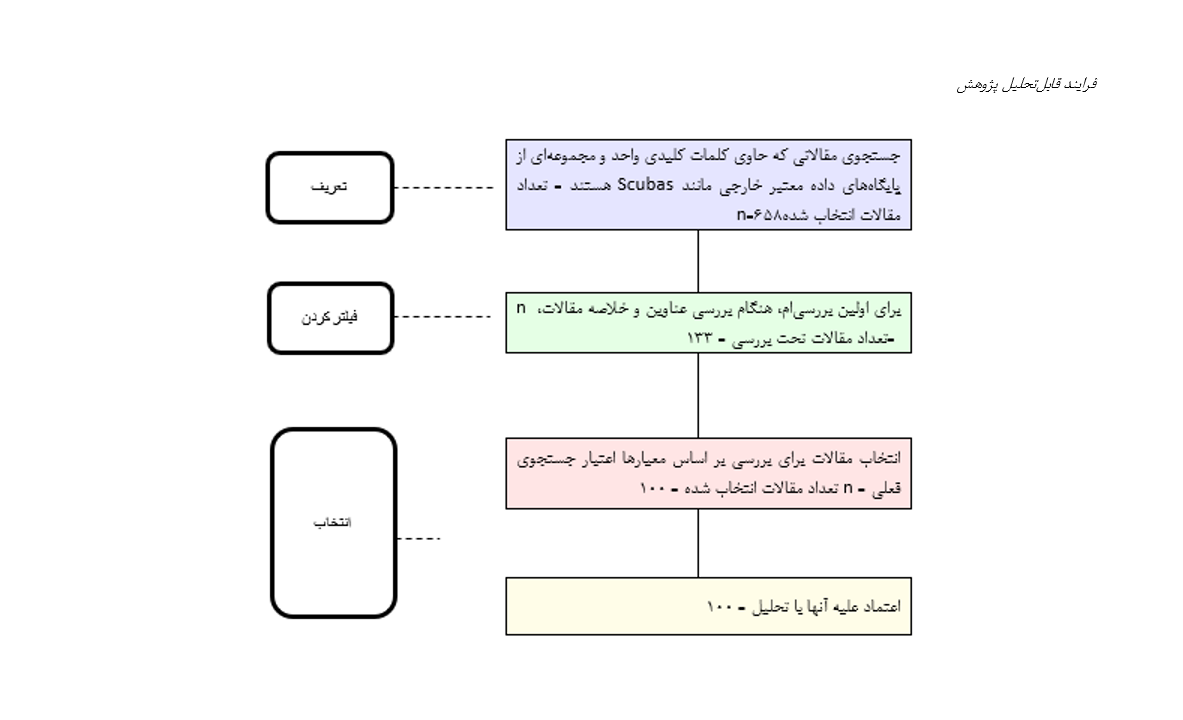
هدف این پژوهش، توسعه و اعتباریابی چارچوب جامع قابلیتهای راهبردی هوش مصنوعی (SAICF) برای مدیریت راهبردی هوشمند در دانشگاههای دولتی بود. پژوهش با رویکردی کیفی و در دو مرحله مکمل، شامل مرور ساختاریافته ادبیات و دلفی اصلاحشده سهمرحلهای، انجام شد. مطالعات منتشرشده بین سالهای ۱۹۸۵ تا ۲۰۲۶ در پایگاههای Scopus، Web of Science، ScienceDirect، IEEE Xplore و Google Scholar جستوجو و مطالعات واجد شرایط با تحلیل محتوای کیفی جهتدار بررسی شدند تا شاخصهای اولیه قابلیتهای راهبردی هوش مصنوعی استخراج شوند. سپس، این شاخصها توسط پنلی هدفمند متشکل از ۲۰ خبره در حوزههای مدیریت راهبردی، هوش مصنوعی و تحول دیجیتال، مدیریت دولتی و مدیریت آموزش عالی ارزیابی شدند. در سه دور دلفی، ارتباط، وضوح، اهمیت و جایگاه مفهومی شاخصها بررسی و اجماع خبرگان با استفاده از ضریب هماهنگی کندال و آزمون خیدو ارزیابی شد. دور دوم دلفی توافق قوی و از نظر آماری معناداری را میان خبرگان درباره شاخصهای حفظشده نشان داد (W کندال = ۰٫۸۲۱، χ² = ۷۴۱٫۲۱۳، df = ۲۷، p < ۰٫۰۰۱). در دور نهایی نیز توافق در همه ابعاد اعتباریابیشده قوی باقی ماند؛ ضرایب W کندال بین ۰٫۷۹ تا ۰٫۸۷ قرار داشت و ضریب کلی چارچوب ۰٫۸۲ بود. چارچوب نهایی شامل هوشمندی راهبردی داده، هوش مصنوعی پیشرفته برای آیندهنگری و تحلیل راهبردی، تصمیمگیری راهبردی مبتنی بر هوش مصنوعی، اتوماسیون هوشمند راهبردی، ادغام راهبردی انسان و هوش مصنوعی، حاکمیت مسئولانه هوش مصنوعی و نوآوری راهبردی مبتنی بر هوش مصنوعی بود. بیشترین هماهنگی خبرگان به هوشمندی راهبردی داده و سپس آیندهنگری و تحلیل راهبردی مبتنی بر هوش مصنوعی اختصاص داشت. چارچوب اعتباریابیشده SAICF نشان میدهد که مدیریت راهبردی هوشمند مبتنی بر هوش مصنوعی نیازمند معماری یکپارچهای از قابلیتهای سازمانی است که هوشمندی داده، تحلیل پیشرفته، تصمیمگیری، اتوماسیون، همکاری انسان و هوش مصنوعی، حاکمیت مسئولانه و نوآوری را بهصورت همافزا ترکیب کند.
دانلودها
مراجع
Abulibdeh, A., Chatti, C. B., Alkhereibi, A., & El Menshawy, S. (2025). A Scoping Review of the Strategic Integration of Artificial Intelligence in Higher Education: Transforming University Excellence Themes and Strategic Planning in the Digital Era. European Journal of Education, 60(1). https://doi.org/10.1111/ejed.12908
Alizadeh, H., & Foroughi, M. (2023). A Strategic SWOT Analysis of Leading Electronics Companies Based on Artificial Intelligence. International Journal of Business Management and Entrepreneurship (IJBME), 2(2), 1-16. https://mbajournal.ir/index.php/IJBME/article/view/42
Bacalso, F. D., Villamor, F. E., & Dela Cruz, R. M. (2026). Institutional Approaches to Generative AI Management in Higher Education: A Systematic Review. Frontiers in Education, 11, 1584210.
Bahramfard, H., Bagheri, G., Kardanayij, A., & Saberi, A. (2025). The Role of Bricolage in Exploiting Opportunities in Sports SMEs. Sport Management Studies, 17(90), 39-62. https://doi.org/10.22089/smrj.2025.15506.3933
Bahramfard, H., Bagheri, G., Kordnaeij, A., & Saberi, A. (2025). The Decision to Take Advantage of the Opportunity by Emphasizing the Role of the Entrepreneur in Sports Businesses. Journal of Research in Sport Management and Motor Behavior, 15(29), 252-279. https://doi.org/20.1001.1.22520716.1404.15.29.12.4
Bahramfard, H., Bagheri Ragheb, G., & Kordnaeij, A. (2023). The Role of Inspiration in the Decision to Exploit Entrepreneurial Opportunities in Sports Businesses. Sport Management Journal, 15(4), 237-257. https://doi.org/10.22059/jsm.2023.358291.3135
Biloslavo, R. (2024). Artificial Intelligence (AI) and Strategic Planning Process within VUCA Environments: A Research Agenda and Guidelines. Management Decision. https://www.emerald.com/md/article/63/10/3599/1259506/Artificial-intelligence-AI-and-strategic-planning
Chaturvedi, A., Yadav, N., & Dasgupta, M. (2025). Tech-Driven Transformation: Unravelling the Role of Artificial Intelligence in Shaping Strategic Decision-Making. International Journal of Human–Computer Interaction, 41(19), 12305-12324. https://doi.org/10.1080/10447318.2025.2456534
Chowdhury, I. H. (2025). Unpacking the Effect of Artificial Intelligence on the Strategic Planning Process Academy of Management Proceedings, https://journals.aom.org/doi/abs/10.5465/AMPROC.2025.12019abstract
Diyin, Z., & Bhaumik, A. (2025). The Impact of Artificial Intelligence on Business Strategy: A Review of Theoretical and Empirical Studies in China. International Journal of Advances in Business and Management Research (IJABMR), 2(3), 9-17. https://ejournal.svgacademy.org/index.php/ijabmr/article/view/108
Dwivedi, Y. K., Hughes, L., Baabdullah, A. M., Ribeiro-Navarrete, S., Giannakis, M., Al-Debei, M. M., Dennehy, D., Metri, B., Buhalis, D., Cheung, C. M. K., Conboy, K., Doyle, R., Dubey, R., Dutot, V., Felix, R., Goyal, D. P., Gustafsson, A., Hinsch, C., Jebabli, I., & Wright, R. (2023). So What If ChatGPT Wrote It? Multidisciplinary Perspectives on Opportunities, Challenges and Implications of Generative Conversational AI for Research, Practice and Policy. International Journal of Information Management, 71, 102642. https://www.sciencedirect.com/science/article/pii/S0268401222000767
Heine, I., Hellebrandt, T., Huebser, L., & Padrón, M. (2023). Hybrid Intelligence: Augmenting Employees' Decision-Making with AI-Based Applications. In Handbook of Human-Machine Systems (pp. 321-332). https://doi.org/10.1002/9781119863663.ch27
Hughes, L., Malik, T., Dettmer, S., Al-Busaidi, A. S., & Dwivedi, Y. K. (2025). Reimagining Higher Education: Navigating the Challenges of Generative AI Adoption. Information Systems Frontiers, 1-23. https://doi.org/10.1007/s10796-025-10582-6
Jarvenpaa, S. L., & Välikangas, L. (2026). Organizational Learning Lens: Does Intelligent Technology Make Organizations More or Less Intelligent? Strategic Organization, 24(2), 285-306. https://doi.org/10.1177/14761270251350678
Kiakojouri, D. (2025). The Function of Artificial Intelligence for Transcendent Governance with a Strategic Management Approach. Management Strategies and Engineering Sciences, 7(2), 139-149. https://msesj.com/index.php/mses/article/view/167
Kim, S., & Baek, Y. (2025). Strategic Management Theory in the Age of AI: A Systematic Review and Research Agenda. Journal of Strategic Management, 28(3), 57-85. https://koasas.kaist.ac.kr/handle/10203/344798
Long, D. Y., Wang, S., Md Rashid, S., & Lu, X. T. (2026). Artificial Intelligence in Higher Education: A Systematic Review of Its Impact on Student Engagement and the Mediating Role of Teaching Methods Frontiers in Education, https://doi.org/10.3389/feduc.2025.1648661
Mehrabi, R., Hematfar, M., & Safati, F. (2024). Predicting Financial Distress of Companies Using a Combined Artificial Immune System Model and Wavelet Neural Network (Artificial Intelligence). Technology in Entrepreneurship and Strategic Management, 3(4). https://www.jafci.com/index.php/jafci/article/view/188
Mehrani, H., Alizadeh, M., & Rasouli, A. (2022). Evaluation of the Role of Artificial Intelligence Tools in the Development of Financial Services and Marketing. Journal of Technology in Entrepreneurship and Strategic Management, 1(1), 71-82. https://www.sid.ir/paper/1732726/fa
Mikalef, P., Gupta, M., Pappas, I. O., & Krogstie, J. (2022). Artificial Intelligence Capability: Conceptualization, Measurement, and Business Value. Information & Management, 59(3), 103558. https://www.sciencedirect.com/science/article/pii/S0378720621000082
Nazari Zadeh, F., Farsijani, E., & Khazaeil, H. (2023). The Future of Artificial Intelligence in Organizational Strategic Management. Vital Sciences and Emerging Domains, 1(1), 119-156. https://vsna.sndu.ac.ir/article_2565.html
Nazarian-Jashnabadi, J., Ronaghi, M., Alimohammadlou, M., & Ebrahimi, A. (2023). The Framework of Factors Affecting the Maturity of Business Intelligence. Business Intelligence Management Studies, 12(46), 1-39. https://doi.org/10.22054/ims.2023.74305.2346
Pardede, M., Rahayu, A., & Gaffar, V. (2025). Digital Strategic Alignment in Smart Ecosystems: A Synthesis of Strategic Capabilities and Emerging Technologies. Journal of Application Business & Management / Jurnal Aplikasi Bisnis dan Manajemen, 11(3). https://openurl.ebsco.com/EPDB%3Agcd%3A9%3A3258233/detailv2?sid
Park, H. U., Kim, S. K., Lee, D. H., & Rho, J. J. (2026). Strategic Imperatives for Digital Transformation: Integrating Literature Review, Expert Validation. Information Systems and e-Business Management, 1-39. https://doi.org/10.1007/s10257-026-00737-6
Parsakia, K., & Jafari, M. (2023). Strategies for Enhancing Customer Engagement Using Artificial Intelligence Technologies in Online Markets. Journal of Technology in Entrepreneurship and Strategic Management (JTESM), 2(1), 49-69. https://journaltesm.com/index.php/journaltesm/article/view/41
Pasi, B. N., & Dhamak, P. (2026). Transforming Higher Education for the Fourth Industrial Revolution: A Strategic Review of Digital Integration and Institutional Readiness. Journal of Science and Technology Policy Management, 1-29. https://doi.org/10.1108/JSTPM-03-2025-0101
Raisch, S., & Krakowski, S. (2021). Artificial Intelligence and Management: The Automation–Augmentation Paradox. Academy of Management Review, 46(1), 192-210. https://doi.org/10.5465/amr.2018.0072
Rezaei, M., Ghasemi, N., & Mansouri, A. (2024). Investigating the Impact of Artificial Intelligence on the Strategic Flexibility of Knowledge-Based Companies in VUCA Conditions. Quarterly Journal of Modern Management Research, 9(3), 55-75.
Siaw, C. A., & Ali, W. (2025). Substitution and Complementarity between Human and Artificial Intelligence: A Dynamic Capabilities View. Journal of managerial psychology, 40(5), 539-554. https://www.emerald.com/jmp/article-abstract/40/5/539/1253714/Substitution-and-complementarity-between-human-and
Sulistiani, A. F. S., Syamlan, A. F., & Bustanul, U. (2025). Artificial Intelligence in Financial Forecasting: Enhancing Accuracy and Strategic Planning in Financial Management. Brilliant International Journal Of Management And Tourism, 5(2), 115-124. https://journalcenter.org/index.php/BIJMT/article/view/4455
Sundari, M. H., Parhana, R., Santhanalakshmi, K., & Haridharan, K. N. (2025). Artificial Intelligence in Digital Marketing: A Systematic Review and Strategic Framework for AI-Augmented Marketing. International Research Journal on Advanced Engineering and Management, 3(8), 2595-2611. https://goldncloudpublications.com/index.php/irjaem/article/view/1116
Velander, J., Kim, J., & Bellas, F. (2026). Governing Generative AI in Higher Education: A Global Delphi Study on Policy and Practice. International Journal of Educational Technology in Higher Education, 23, 14.
Yamin, M. A., Almuteri, S. D., Bogari, K. J., & Ashi, A. K. (2024). The Influence of Strategic Human Resource Management and Artificial Intelligence in Determining Supply Chain Agility and Supply Chain Resilience. Sustainability, 16(7), 2688. https://www.mdpi.com/2071-1050/16/7/2688
دانلودها
گاهشمار انتشار
- ارسال
- بازنگری
- پذیرش
شماره
نوع مقاله
مجوز
حق نشر 2025 Hasan Fadhil AL-Thabhawee; Nasrin Razi , Mohammad Faryabi , Sajjad Naghdi (Author)

این پروژه تحت مجوز بین المللی Creative Commons Attribution-NonCommercial 4.0 می باشد.